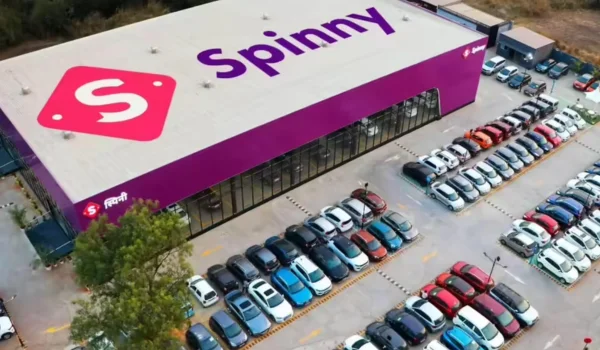
Spinny, founded in 2015 by Niraj Singh, Mohit Gupta, and Ramanshu Mahaur, has emerged as a prominent player in India’s pre-owned car market. The company operates a full-stack business model, overseeing every aspect of the used car buying and selling process to ensure quality and transparency. This approach has enabled Spinny to build trust among consumers and establish a strong market presence.
Primary Revenue Streams:
- Direct Car Sales:
- Procurement and Refurbishment: Spinny acquires used cars from individual sellers, auctions, and dealerships. Each vehicle undergoes a comprehensive 200-point inspection and necessary refurbishment to meet quality standards.
- Sales Margin: After certification, these cars are sold to customers at a marked-up price, generating profit from the difference between the acquisition cost and the selling price.
- Value-Added Services:
- Vehicle Inspection Fees: For sellers, Spinny offers detailed vehicle inspections, charging a fee for this service.
- Extended Warranties: Customers can purchase extended warranty packages, providing additional revenue for the company.
- Insurance and Registration Assistance: Spinny facilitates insurance and registration processes, earning commissions from partner institutions.
- Financing Solutions:
- Loan Facilitation: Through partnerships with financial institutions, Spinny offers car loans to buyers. The company earns processing fees and commissions from these financial partners.
- Subscription Services:
- Car Subscriptions: Exploring modern ownership models, Spinny has introduced subscription plans where customers pay a monthly fee to use a vehicle, providing a steady revenue stream.
- Advertising and Partnerships:
- Brand Collaborations: Spinny partners with automotive accessory brands and service providers, generating advertising revenue through in-app promotions and website advertisements.
Financial Performance:
In the fiscal year 2023-2024 (FY24), Spinny reported an operating revenue of ₹3,725 crore, marking a 14% increase from ₹3,259.7 crore in the previous fiscal year. The company’s net loss reduced by 28% to ₹590.37 crore in FY24, down from ₹819.89 crore in FY23.
Strategic Initiatives and Market Positioning:
Spinny’s success can be attributed to its customer-centric approach and technological integration:
- Full Ownership of the Value Chain: By controlling the entire process—from acquisition and inspection to refurbishment and sales—Spinny ensures consistent quality and pricing transparency.
- Technological Integration: Utilizing artificial intelligence and data analytics, Spinny optimizes pricing strategies, demand forecasting, and inventory management, enhancing operational efficiency.
- Customer Convenience: Services such as home test drives, doorstep delivery, and instant pricing make the car buying and selling process seamless for customers.
The Indian used car market is projected to grow at a compound annual growth rate (CAGR) of 11% between 2023 and 2028. Spinny’s emphasis on transparency, quality assurance, and customer satisfaction positions it well to capture a significant share of this expanding market.
In summary, Spinny’s comprehensive business model, encompassing direct car sales, value-added services, financing solutions, and strategic partnerships, has established it as a trusted and innovative leader in India’s pre-owned car industry.

Shashi Kant is the Founder and Editor of BusinessScroller.com, a leading platform for business insights, finance trends, and industry analysis. With a passion for journalism and expertise in business reporting, he curates well-researched content on market strategies, startups, and corporate success stories. His vision is to provide valuable information that empowers entrepreneurs and professionals. Under his leadership, BusinessScroller.com has grown into a trusted source for in-depth articles, customer care guides, and financial expertise.