
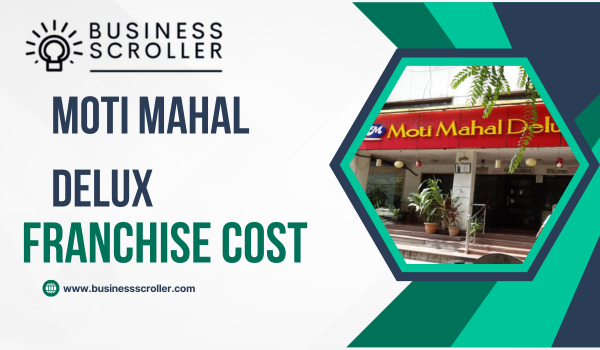
If you’re thinking of entering the restaurant-franchise space in India, the iconic Moti Mahal brand—famous for its North Indian & tandoori cuisine including the legendary butter chicken—offers a credible opportunity. Because food service is competitive and high-risk, having a strong brand and a proven model helps reduce risk. In this blog post, I’ll take you through the franchise model of Moti Mahal Delux, the estimated cost, ROI expectations, eligibility criteria, application steps and additional practical insights so you can assess whether this opportunity fits your goals.
About Moti Mahal Delux
Moti Mahal has a storied legacy: originally founded in the early 20th century by Kundan Lal Gujral in Peshawar and later in Delhi, the brand pioneered tandoori-cooking and the butter chicken dish. The present-day brand (Moti Mahal Delux Management Services Pvt. Ltd) has expanded via company-owned and franchise outlets in India and overseas.
Because of this heritage, the brand enjoys strong consumer recognition and premium positioning, which can help a franchisee. On the flip side, this also means the investment will be higher than low-end food kiosks, and operations will demand good execution.
Franchise Model – What does it look like?
Formats & Ownership Models
From the brand’s own disclosures and franchise-listing portals, Moti Mahal offers multiple outlet formats: kiosk/quick-service, casual-dine, fine-dine, cloud kitchen formats and possibly food-truck / “trail” formats.
In terms of ownership models: According to one franchise page, there is a “FOCM (Franchise Owned Company Managed)” model proposed, where franchisee owns the outlet (invests in setup) but day-to-day operations are managed by company/management. However, other sources mention “FOFO (Franchise Owned Franchisee Operated)” for certain formats. If they indeed offer FOCM, this might reduce the operational burden on the franchisee but might also mean different revenue/royalty sharing. Always clarify exact model for your city/format.
Support from the Franchisor
The brand states it supports: site-selection assistance, interior design & fit-out guidelines, kitchen & staff training, supply-chain tie-ups, branding & marketing support. E.g., the Moti Mahal website says they help with vendor management, staff recruitment & training, menu planning and licensing for liquor/food.
This support is critical especially if you are entering the food-business for the first time.
Franchise Cost Breakdown & Investment Estimate
Because investment varies significantly by format (kiosk vs fine-dine) and by location (metro vs tier-2/3), I present ranges based on credible sources plus practical assumptions.
Typical Cost Components
- Franchise Fee: one-time fee paid to brand for right to use name, support, training.
- Fit-out & interior: cost of venue development, furniture, décor, signage.
- Kitchen equipment & installation: ovens, tandoor, HVAC, refrigeration, display counters.
- Initial inventory & supplies: raw materials, packaging, consumables.
- Working capital: salaries, utilities, rent buffer for initial months.
- Licences/permissions: FSSAI, local municipality, liquor licence (if required), fire/safety.
- Marketing & launch costs: opening promotions, digital marketing, signage.
Estimated Investment Ranges
From the brand’s website and other sources:
- A kiosk or smaller format (food-court or mall) investment: ₹20–30 lakh.
- A casual-dining format: investment around ₹40–60 lakh (depending on size/location).
- A fine-dining flagship format: investment ₹70 lakh to ₹1 crore (or more) including premium interiors, large size.
- Franchise Fee: quoted as ₹7–12 lakh (depending on format) in some sources.
- Royalty Fee: frequently cited in the range of 6%–8% of gross sales for many formats.
Summarising: Total investment typically ranges from ₹20 lakh (for very small format) to ₹1 crore+ (for large fine-dine format).
Revenue, Margins & ROI Expectations
Profitability & Payback
A franchise listing notes: food cost approx 30-35% (for dine-in format) and estimated ROI (break-even) around 14-24 months for certain models. Another source claims ROI “within 12-18 months” for certain formats. A listing also mentions profit margins of 35-40%.
Practical Scenario
Suppose you invest ₹50 lakh for a mid-sized casual dining outlet. If you achieve annual revenue of say ₹1.2 crore (i.e., ~₹10 lakh per month) and net margin after rent, wages, utilities, cost of goods is ~10% (₹12 lakh per annum). That would mean payback ~4–5 years. But if you achieve better sales, say ₹1.8 crore, net margin ~15% (₹27 lakh), payback ~2 years. Location and execution matter.
The quoted ROI of 12–18 months may apply to high-footfall metro locations with strong brand pull and efficient operations. Lower-traffic locations may take longer (24-36 months or more). Always budget slower scenario.
Eligibility & Ideal Franchisee Profile
To be considered for a Moti Mahal franchise, typical criteria include:
- Financial capacity to fund the investment + working capital buffer.
- Ability to secure suitable site (size depends on format, e.g., 400-600 sq.ft for kiosk; 1500-3000 sq.ft for casual dining; more for fine-dine).
- Experience or readiness to manage restaurant operations (staffing, service, quality). Even if the brand supports operations, you must commit.
- Commitment to maintaining brand standards for food, service, hygiene.
- Good market knowledge: understanding of local F&B dynamics, rent levels, customer behaviour.
- Willingness to work with brand’s SOPs, training programmes, menu & supply chain.
Prior restaurant experience is advantage but not always mandatory—many listings say “no prior F&B experience is required” though franchisees must show business acumen.
Steps to Apply for a Moti Mahal Franchise
Here’s a step-by-step process you should follow:
- Research & Visit: Visit existing Moti Mahal outlets in your city/region. Evaluate concept, menu, footfall, pricing.
- Contact Franchise Team: Use the official website to fill an enquiry / franchise application form. Provide basic details: your profile, proposed city/location, investment capability.
- Receive Franchise Information Pack (FIM): The brand will send detailed material: cost breakdown, format options, territory rights, support package, agreement terms.
- Site Proposal & Approval: Identify potential sites. Submit lease/ownership proof, area details, local demographics. Brand will inspect & approve.
- Agreement & Payment: After site approval and background checks, you’ll sign the franchise agreement. Pay the franchise fee and initial deposit.
- Store Setup & Training: Brand supports you in design/fit-out, kitchen installation, staff training (culinary & service).
- Launch & Operations: Execute grand opening launch plan; coordinate with brand marketing; commence operations and track KPIs.
- Ongoing Support & Review: You’ll receive brand support for menu updates, marketing campaigns, supply chain, operational audits. Monitor monthly performance, adjust strategy.
Practical Tips & Cautions
- Location is critical: Even a strong brand cannot compensate for poor visibility, low foot traffic or excessive rent. Get realistic rent numbers and estimate break-even accordingly.
- Budget conservatively: Assume slower sales in year-one. Build a working-capital buffer for 6-12 months of operations.
- Clarify royalty/marketing fees: Make sure you know what ongoing fees (royalty, marketing fund) you must pay.
- Examine agreement renewal/exit clauses: What happens after the term (5-9 years)? Are there exclusivity rights? What if you need to exit early?
- Talk to existing franchisees: If possible, speak to current Moti Mahal franchisees to understand real challenges: staffing, food-cost escalation, supply delays, brand support.
- Delivering consistency: With a heritage brand, customers expect high quality and consistency. Poor execution can damage local brand trust.
- Delivery & take-away component: In today’s market, delivery and digital channels (aggregators) matter. Make sure your location/format is compatible with delivery orders.
- Mechanics of the model (FOCM vs FOFO): If the model is “Company-Managed” (FOCM) you may have lower operational load but possibly different profit sharing/terms. Clarify how much control you have and what your role will be.
- Competition & local fit: North Indian cuisine is common, so your differentiator will be brand + ambience + service + value. Study local competition.
Final Thoughts
A Moti Mahal Delux franchise can be a compelling opportunity for an entrepreneur who wants to enter the restaurant business with a strong brand backing. With investments starting around ₹20-30 lakh for smaller formats and going up to ₹70 lakh-₹1 crore+ for larger formats, the financial commitment is substantial but so is the potential if executed well. The quoted ROI/pay-back is 12-24 months in ideal circumstances, though you should plan for 24-36 months in a moderate-location setting.

Shashi Kant is the Founder and Editor of BusinessScroller.com, a leading platform for business insights, finance trends, and industry analysis. With a passion for journalism and expertise in business reporting, he curates well-researched content on market strategies, startups, and corporate success stories. His vision is to provide valuable information that empowers entrepreneurs and professionals. Under his leadership, BusinessScroller.com has grown into a trusted source for in-depth articles, customer care guides, and financial expertise.