
If you’ve ever felt that a business is running in a messy or unorganized way—tasks getting delayed, employees confused, customers unhappy—then the problem is usually not the people, but the process.
This is where Business Process Modelling (BPM) comes into the picture.
Whether you run a small shop, manage a team, or want to build a scalable business, understanding how work flows inside your business is extremely important. Let’s explore this concept in a simple, practical, and Indian context.
What is Business Process Modelling?
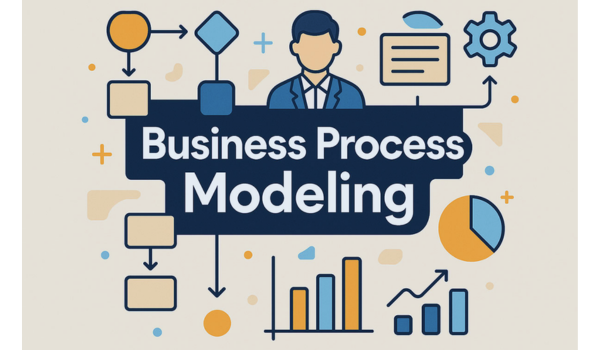
Business Process Modelling (BPM) is the practice of visually mapping out how a business process works—from start to finish.
👉 In simple words:
It is a way to draw and understand how work gets done in your business step-by-step.
Example to Understand Easily
Let’s take a simple example of an online order:
- Customer places an order
- Order is received
- Product is packed
- Courier is booked
- Product is delivered
Now imagine drawing this entire flow in a diagram — that’s business process modelling.
Why is Business Process Modelling Important?
Many small business owners in India run their work based on experience and “jugaad.” It works in the beginning, but as the business grows, problems start:
- Work gets delayed
- Employees make mistakes
- Customers complain
- Costs increase
👉 BPM helps you bring clarity, control, and efficiency.
Key Benefits of Business Process Modelling
Let’s understand how BPM helps your business grow:
- Brings Clarity in Work
When processes are written or drawn clearly:
- Everyone knows what to do
- Confusion reduces
- Work becomes smoother
👉 No more “yeh kaam kiska hai?” problems.
- Improves Efficiency
BPM helps you identify:
- Unnecessary steps
- Repeated work
- Time waste
👉 You can remove these and make your process faster.
- Reduces Costs
When work is organized:
- Less wastage
- Better use of resources
- Fewer mistakes
👉 Result = more profit.
- Helps in Scaling Business
If you want to grow from:
- 1 shop → 5 shops
- 1 employee → 20 employees
You need clear systems.
👉 BPM makes scaling easy because processes are already defined.
- Improves Customer Experience
Faster delivery, fewer mistakes, better service — all come from strong processes.
👉 Happy customer = repeat business.
- Makes Training Easy
When you hire new staff:
- You don’t need to explain everything again
- They can follow the process
👉 Saves time and effort.
Types of Business Processes
Before modelling, you should understand different types of processes:
- Core Processes
These are directly related to your main business.
👉 Example:
- Manufacturing
- Sales
- Delivery
- Support Processes
These help the main processes run smoothly.
👉 Example:
- HR
- Accounting
- IT support
- Management Processes
These involve planning and decision-making.
👉 Example:
- Strategy
- Budgeting
- Performance tracking
Common Techniques of Business Process Modelling
Don’t worry, you don’t need technical knowledge. Here are simple methods:
- Flowcharts (Most Popular)
- Uses boxes and arrows
- Shows step-by-step process
👉 Best for beginners.
- BPMN (Business Process Model and Notation)
- More advanced
- Used in big companies
- Diagrams & Maps
- Visual representation
- Easy to understand
👉 For small business owners, simple flowcharts are more than enough.
Real-Life Example (Indian Context)
Let’s say you run a small tiffin service:
Without BPM:
- Orders on WhatsApp
- Confusion in delivery
- Wrong items sent
- Customer complaints
With BPM:
- Order received
- Order recorded in register/app
- Food prepared
- Packed with label
- Delivery assigned
- Feedback collected
👉 Result:
- Smooth operations
- Happy customers
- More orders
How to Create a Business Process Model (Step-by-Step)
You don’t need software or big investment. Just follow this:
Step 1: Identify the Process
Choose one process:
- Order handling
- Customer service
- Delivery
Step 2: List All Steps
Write everything in sequence.
👉 Example:
Order → Confirm → Pack → Ship → Deliver
Step 3: Draw the Flow
Use:
- Paper
- Whiteboard
- Simple tools like PowerPoint
Step 4: Identify Problems
Ask yourself:
- Where is delay happening?
- Where are mistakes happening?
Step 5: Improve the Process
- Remove unnecessary steps
- Simplify work
- Assign clear responsibility
Step 6: Implement and Monitor
- Apply changes
- Track results
- Improve continuously
Tools You Can Use (Even as a Beginner)
You don’t need expensive software. Start simple:
- Pen & paper
- Excel
- Free online tools like diagrams
As you grow, you can move to advanced tools.
Common Mistakes to Avoid
Many people try BPM but fail because of these mistakes:
❌ Making It Too Complicated
Keep it simple. Don’t overthink
❌ Not Involving Team
Your staff knows real problems — involve them.
❌ Not Updating Processes
Business changes, so processes should also change.
❌ Ignoring Small Problems
Small issues become big later.
Personal Insight (Very Important)
From my experience, most small businesses in India don’t fail because of lack of customers — they fail because of poor systems and processes.
Even a small improvement in process can:
- Save hours daily
- Increase profit
- Reduce stress
Example Insight
Two shop owners earn similar revenue:
Owner A:
- Works all day
- Handles everything himself
- Always stressed
Owner B:
- Has clear processes
- Delegates work
- Focuses on growth
👉 Result: Owner B grows faster and lives better.
How BPM Can Help You Personally
If you are planning to:
- Start a business
- Grow income
- Build something scalable
Then BPM will help you:
- Stay organized
- Reduce workload
- Focus on growth instead of daily chaos
Final Thoughts
Business Process Modelling is not just for big companies — it is even more important for small businesses.
In India, where competition is increasing and margins are tight, efficiency is the key to success.
👉 And efficiency comes from strong processes.
Simple Takeaway
👉 Don’t just work hard — build smart systems.
Because in the long run:
- Systems create freedom
- Processes create profit
- Clarity creates growth

Shashi Kant is the Founder and Editor of BusinessScroller.com, a leading platform for business insights, finance trends, and industry analysis. With a passion for journalism and expertise in business reporting, he curates well-researched content on market strategies, startups, and corporate success stories. His vision is to provide valuable information that empowers entrepreneurs and professionals. Under his leadership, BusinessScroller.com has grown into a trusted source for in-depth articles, customer care guides, and financial expertise.