

Personal loans are one of the most popular financing options in India because they can be used for almost any purpose, including medical emergencies, weddings, travel, education, home renovation, and debt consolidation. Since these loans are unsecured, borrowers do not need to provide collateral or security.
However, many applicants are surprised when their personal loan applications get rejected despite having a stable income. This happens because lenders evaluate several factors beyond salary, including credit score, repayment capacity, employment history, existing debts, and documentation.
Understanding the reasons behind personal loan rejection can help you improve your financial profile and increase your chances of approval in the future. This guide explains the most common reasons personal loans get rejected and provides practical tips to avoid them.
What Does Personal Loan Rejection Mean?
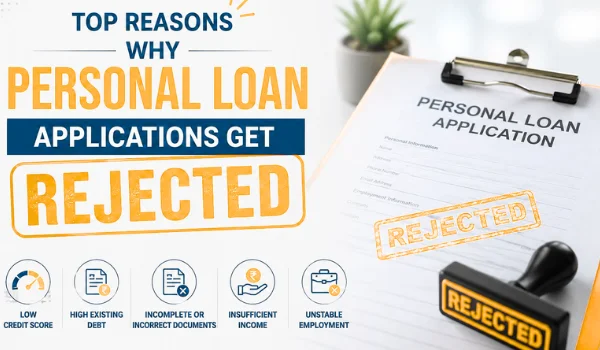
A personal loan rejection occurs when a bank, NBFC, or financial institution declines a borrower’s loan application after evaluating their financial and credit profile.
The lender may reject the application due to:
- Credit-related issues
- Income concerns
- Documentation errors
- Eligibility mismatches
- High repayment risk
Basic Eligibility for Personal Loans
Most lenders require applicants to meet certain conditions.
| Criteria | Typical Requirement |
| Age | 21–60 Years |
| Citizenship | Indian Resident |
| Employment | Salaried or Self-Employed |
| Stable Income | Required |
| Credit Score | Usually 700+ Preferred |
| Bank Account | Active Account |
Meeting these requirements does not guarantee approval, but it improves eligibility.
Top 15 Reasons Personal Loans Get Rejected
1. Low CIBIL Score
A poor credit score is one of the most common reasons for rejection.
Typical Credit Score Evaluation
| Credit Score | Approval Chances |
| 750+ | Excellent |
| 700–749 | Good |
| 650–699 | Moderate |
| Below 650 | Low |
Lenders may view low scores as a sign of repayment risk.
2. Poor Repayment History
Even if your current score is acceptable, past payment issues can create concerns.
Negative Credit Behaviors
- Missed EMIs
- Credit card defaults
- Loan settlements
- Delayed payments
3. Insufficient Income
Lenders evaluate whether your income is sufficient to manage additional EMIs.
Factors Considered
- Monthly salary
- Business income
- Existing financial obligations
4. High Debt-to-Income Ratio
If a large portion of your income is already committed to EMIs, lenders may reject your application.
Example
| Debt-to-Income Ratio | Assessment |
| Below 30% | Excellent |
| 30–40% | Good |
| Above 50% | Risky |
5. Multiple Loan Applications
Applying to many lenders within a short period can negatively affect your profile.
Why It Matters
Each application may create a hard inquiry on your credit report.
6. Unstable Employment History
Frequent job changes may indicate income instability.
Preferred Profile
| Employment Status | Lender Preference |
| Stable Employment | High |
| Frequent Job Changes | Lower |
7. Short Employment Duration
Many lenders require minimum work experience.
Common Requirements
- 6–12 months with current employer
- 1–2 years total work experience
8. Incomplete Documentation
Missing documents can delay or lead to rejection.
Common Missing Documents
- PAN Card
- Aadhaar Card
- Salary Slips
- Bank Statements
9. Errors in Application Form
Incorrect information may create verification issues.
Examples include:
- Wrong PAN number
- Incorrect address
- Mismatched income details
10. Existing Loan Defaults
Current loan defaults significantly reduce approval chances.
Lenders generally avoid approving borrowers with active defaults.
11. Credit Card Overutilization
Using too much of your credit limit may indicate financial stress.
Recommended Utilization
| Credit Limit Usage | Impact |
| Below 30% | Positive |
| Above 70% | Negative |
12. Lack of Credit History
Applicants with no credit history may face challenges.
Common Cases
- First-time borrowers
- Individuals without credit cards
- Young professionals
13. Employer Not on Preferred List
Some lenders maintain preferred employer lists.
Employees of established companies may receive better consideration.
14. Age Eligibility Issues
Applicants outside the lender’s age criteria may face rejection.
Common Age Range
| Category | Age Requirement |
| Minimum Age | 21 Years |
| Maximum Age | 60–65 Years |
15. Applying for an Unrealistic Loan Amount
Requesting a loan amount that exceeds your repayment capacity may lead to rejection.
Personal Loan Rejection vs Approval Comparison
| Factor | Approved Applicant | Rejected Applicant |
| Credit Score | 750+ | Below 650 |
| Income Stability | Strong | Weak |
| Existing Debt | Low | High |
| Employment History | Stable | Frequent Changes |
| Documentation | Complete | Incomplete |
| Credit Utilization | Low | High |
Benefits and Drawbacks of Strict Loan Approval Criteria
Benefits
| Benefits | Explanation |
| Responsible Lending | Reduces default risk |
| Lower Financial Stress | Prevents over-borrowing |
| Better Credit Discipline | Encourages healthy borrowing habits |
| Stable Banking System | Improves overall loan quality |
Drawbacks
| Drawbacks | Explanation |
| Limited Access for Some Borrowers | New borrowers may struggle |
| Strict Eligibility | Some applicants may be excluded |
| Longer Preparation Time | Borrowers may need to improve profiles first |
Interest Rates and Credit Profile
Your financial profile often affects the interest rate offered.
| Borrower Profile | Typical Outcome |
| Excellent Credit | Lower Rates |
| Average Credit | Standard Rates |
| Poor Credit | Higher Rates or Rejection |
Documents Required for Personal Loan Approval
Identity Proof
- PAN Card
- Aadhaar Card
- Passport
- Driving Licence
Address Proof
- Utility Bills
- Passport
- Aadhaar Card
Income Proof
Salaried Applicants
- Salary Slips
- Form 16
- Bank Statements
Self-Employed Applicants
- Income Tax Returns
- GST Returns
- Financial Statements
Step-by-Step Process to Improve Loan Approval Chances
Step 1: Check Your Credit Score
Review your credit profile before applying.
Step 2: Correct Credit Report Errors
Dispute inaccuracies if found.
Step 3: Reduce Existing Debt
Pay off high-interest obligations where possible.
Step 4: Improve Credit Utilization
Lower outstanding credit card balances.
Step 5: Organize Documents
Ensure all documents are current and accurate.
Step 6: Apply to Suitable Lenders
Choose lenders that match your profile and eligibility.
Expert Tips to Avoid Personal Loan Rejection
Maintain a CIBIL Score Above 750
Higher scores improve approval chances significantly.
Keep EMIs Manageable
Avoid taking excessive loans simultaneously.
Maintain Stable Employment
Longer employment history strengthens your application.
Apply for a Realistic Amount
Borrow according to your income level.
Monitor Credit Reports Regularly
Review reports for errors and unusual activity.
Common Mistakes to Avoid
- Missing EMI payments
- Applying to multiple lenders simultaneously
- Providing inaccurate information
- Ignoring credit score issues
- Borrowing beyond affordability
- Submitting incomplete documents
- Keeping credit card balances too high
Related Keywords
You can naturally target related search terms such as:
- Personal loan rejection reasons
- Why personal loan gets rejected
- Personal loan eligibility India
- Low CIBIL score loan rejection
- Improve personal loan approval chances
- Personal loan application mistakes
- Loan rejection solutions
- Credit score for personal loan
Conclusion
Personal loan rejection can be frustrating, but understanding the reasons behind it can help you prepare better for future applications. Low credit scores, high debt levels, unstable employment, incomplete documents, and unrealistic loan requests are among the most common causes of rejection.
Before applying, review your credit report, reduce existing debts, maintain stable income, and ensure all documents are accurate and complete. A strong financial profile not only increases your chances of approval but may also help you secure lower interest rates and better loan terms.
With proper planning and responsible financial habits, you can significantly improve your personal loan eligibility and access credit when you need it most.
Frequently Asked Questions (FAQs)
Q: What is the most common reason for personal loan rejection?
A: A low CIBIL score is one of the most common reasons lenders reject personal loan applications.
Q: Can I get a personal loan with a low credit score?
A: It may be possible, but approval chances are lower and interest rates may be higher.
Q: How can I improve my chances of approval?
A: Maintain a good credit score, reduce debt, provide accurate documents, and apply for a realistic loan amount.
Q: Does applying for multiple loans affect approval?
A: Yes. Multiple hard inquiries within a short period may negatively impact your credit profile.
Q: Can incomplete documents lead to rejection?
A: Yes. Missing or incorrect documentation is a common reason for loan processing delays and rejections.
Q: How much income is required for a personal loan?
A: Requirements vary by lender, loan amount, and applicant profile.
Q: Does job stability matter for personal loan approval?
A: Yes. Stable employment and consistent income are important factors in lender assessments.
Q: Can I reapply after a personal loan rejection?
A: Yes. However, it is advisable to address the reasons for rejection before submitting a new application.

