
The Rise of the 2026 Color Blocking Movement
Color blocking in interiors is not a new idea, but in 2026 it is taking a very different form. Earlier, it was mostly about bright walls or statement corners. Now it is becoming more structured, more intentional, and more connected to furniture and layout.
Color blocking means dividing a space using clear blocks of contrasting colors. These blocks can be on walls, furniture, or even ceilings. The aim is not decoration alone but creating visual rhythm and energy inside the home.
The shift in 2026 is driven by people wanting homes that feel alive and personal. Social media, global design exposure, and a return of playful modern styles have encouraged homeowners to experiment more. Clean white spaces are slowly making room for confident color choices.
In Indian homes, this movement fits well. Homes are becoming more personality driven. Furniture is no longer just neutral support. It is becoming expressive and flexible, adapting to changing moods and lifestyles.
Why Color Blocking Is Changing in 2026
Colors affect how we feel inside a space. Bold colors bring energy. They lift mood, spark creativity, and make a space feel active. In contrast, dull or over neutral homes can feel flat and tiring over time.
In 2026, people are using contrast to give structure to their homes. Color blocks help the eye understand space better. A strong color on one side anchors the room. A softer block balances it.
There is also a cultural shift. People are more comfortable showing individuality through their homes. Expressive interiors are no longer seen as risky. They are seen as honest.
Non traditional color combinations are becoming normal. Deep blues with earthy browns, muted greens with mustard, terracotta with soft grey. Geometry helps keep these bold choices controlled and intentional.
Furniture as the New Canvas for Color Blocking
Furniture is playing a central role in this shift. Instead of walls carrying all the color, furniture pieces are becoming visual anchors.
Sideboards with two or three strong colors are becoming common. wardrobe for bedroom with different colored shutters creates rhythm in bedrooms. Coffee tables with geometric color sections add character without crowding the space.
The color palette is wide but thoughtful. Earthy bold tones, jewel shades, muted monotones, and abstract forms are all being used. The focus is on contrast rather than brightness alone.
Materials matter here. Wood grounds have strong colors. Metal adds sharpness. Matte finishes reduce glare. Veneers and painted surfaces allow smooth transitions between blocks.
Geometric color blocking in furniture adds depth. It makes even simple layouts feel layered and modern.
Color Blocked Interiors Shaping Spaces
Walls are no longer just backgrounds. Large geometric patterns are being used to shape rooms. Arches painted in bold colors, rectangular sections behind sofas, asymmetrical blocks near dining areas.
Color is also being used to define zones. Instead of physical partitions, a change in color separates a study corner from the living space. Dining areas stand out without needing extra walls.
Balance is key. Neutrals still play an important role. Shades like navy, terracotta, mustard, sage, and olive are paired with softer tones to keep spaces comfortable.
In Indian homes, color blocking works well in small but important areas. Entryways feel welcoming. Balconies gain personality. Study corners feel focused. Dining walls become conversation points.
Minimal furniture works best with strong colors. Clean shapes allow colors to stand out without making the room heavy.
How Color Blocking Is Changing Indian Homes
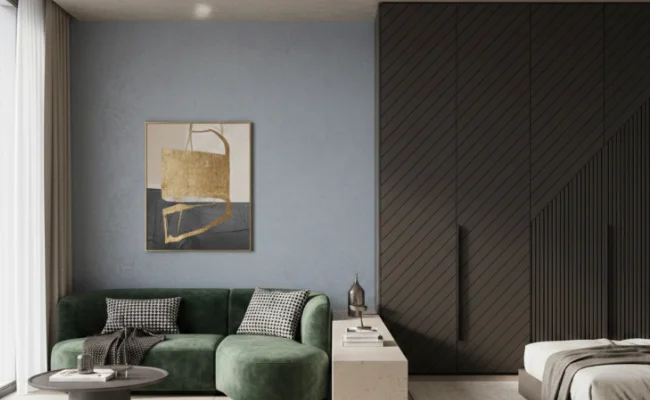
Indian homes are often compact. Color blocking helps change how space is perceived. Vertical blocks make ceilings feel higher. Horizontal blocks widen narrow rooms.
Furniture and wall combinations are being planned together. A bold sofa is supported by a calmer wall. A strong wardrobe front is balanced by neutral flooring.
In living rooms, vibrant sofas and geometric shelves add energy. Bedrooms see dual tone bed frames and wardrobes that bring character without overwhelming the space.
Dining areas use statement chairs and color blocked crockery units to break monotony. Workspaces benefit from energising hues that support alertness and creativity.
Natural materials like wood, textiles, and handcrafted elements help soften bold geometry. This balance keeps Indian warmth alive within modern design.
Practical Tips for Using Color Blocking at Home
Start small. Cushions, side tables, chairs, or small cabinets are easy places to experiment.
Pair bold colors with grounding materials like wood, cane, linen, rattan, or metal. This keeps the space balanced.
Follow a simple color ratio. One dominant shade, one supporting color, and one accent works well.
Avoid using too many shapes. Two or three clear color zones are enough to make an impact.
Modular furniture and movable accents make it easier to change colors as trends or moods shift.
Final Thoughts
Color blocking in 2026 is more than a visual trend. It reflects how people want their homes to feel expressive and alive.
Bold geometric colors bring structure, energy, and personality into interiors. When used with care, they redefine furniture and spaces without overwhelming them.
This approach allows homes to move away from sameness and toward spaces that truly reflect the people living in them.

Shashi Kant is the Founder and Editor of BusinessScroller.com, a leading platform for business insights, finance trends, and industry analysis. With a passion for journalism and expertise in business reporting, he curates well-researched content on market strategies, startups, and corporate success stories. His vision is to provide valuable information that empowers entrepreneurs and professionals. Under his leadership, BusinessScroller.com has grown into a trusted source for in-depth articles, customer care guides, and financial expertise.