
If you’re exploring a restaurant-franchise opportunity in India, particularly in the popular biryani / QSR (Quick Service Restaurant) space, then Meghana Foods stands out as a strong contender. The brand has built considerable recognition in South India (and beyond) for its biryani and Andhra/South-Indian offerings. In this blog post, I’ll cover the franchise model, estimated cost, ROI, eligibility criteria, steps to apply — plus some additional insights you should know before you invest.
About Meghana Foods
Meghana Foods is a well-known Indian restaurant chain, especially prominent in Bengaluru and other South Indian markets. The brand has gained popularity for its biryani, Andhra-style meals, and delivery/aggregator presence. Some publicly cited metrics: its unit-level EBITDA margins are estimated at 28-32% and payback periods for outlets ~18-24 months in good locations.
The appeal for a franchise investor: Existing brand recognition, delivery capability, a fairly scalable concept, and a strong footprint in urban centres.
Franchise Model – How Meghana Foods Works
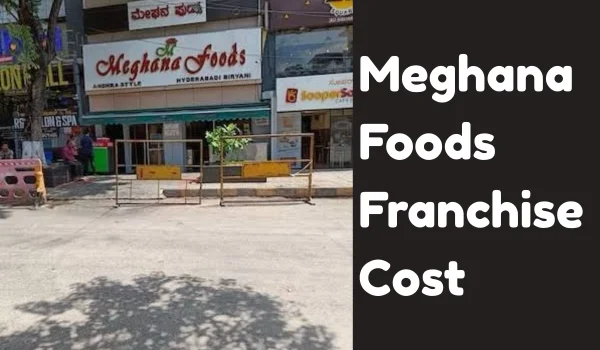
As with many restaurant franchise models, the brand offers prospective franchisees the right to operate under the Meghana Foods name, follow their menu, recipes, operations, signage, branding and SOPs (Standard Operating Procedures). The franchisee takes care of location leasing, store build-out, staffing, operations and local marketing, with the brand providing support (training, brand guidelines, supply chain tie-ups, possibly sourcing). In many cases for a strong brand like Meghana, delivery / aggregator partnerships are built in or supported by central operations, which is an advantage.
Typically, a franchise model will include:
- One-time franchise/brand fee
- Setup costs (interior, kitchen equipment, signage)
- Working capital / initial inventory
- Ongoing costs (royalty/marketing fee) though precise numbers for Meghana are not publicly fully detailed in all sources.
- Site requirements: high footfall, preferably urban commercial, or good delivery/traffic potential.
While I couldn’t find a publicly detailed & fully official brochure listing exact investment for every format of Meghana Foods across India, there are consistent references to investment ranges, margins and pay-back periods. For example, a food-franchise commentary mentions: “Payback period: 18-24 months” for Meghana’s outlets.
Estimated Cost Breakdown (Based on Available Data + Practical Assumptions)
Because the brand doesn’t publish one standard investment number for all locations/formats, I’ll offer a realistic estimate using available public data + typical restaurant franchise cost components.
Investment components to plan for:
- Franchise/Brand Fee: Though specific number for Meghana Foods isn’t reliably published in open domain (at least from my search).
- Interior & fit-out (dining area, kitchen, furniture, signage)
- Kitchen equipment, display, POS, billing system, delivery packaging integration
- Initial inventory (food raw materials, packaging, first weeks of operation)
- Working capital (staff salaries, utilities, variable cost pooling for first few months until operations stabilise)
- Pre-opening marketing / launch cost
- Licences, approvals, local compliance, deposit/rent advance for location.
Estimated ranges:
Given the margin and pay-back period data (18-24 months) and category of brand, a plausible total investment for a standard sized outlet in an urban market (maybe 300-500 sq ft or slightly larger) could lie in the ballpark of ₹40-80 lakh or more (for prime locations) though specific smaller formats may be lower. I must emphasise this is an estimate because I did not find a definitive public number for Meghana’s franchise cost in India in all cities.
For example, a commentary on food franchise costs (not Meghana specific) shows for mid-range QSR/F&B brands: “Investment range ₹10-30 lakhs” for formats 300-600 sq.ft. If Meghana is positioned a bit higher (given size, brand, delivery footprint), the investment might be on the higher side of that bracket or above.
Putting it in approximate terms for a hypothetical outlet:
- Brand/Franchise Fee: say ₹10-20 lakh (not official, just assumption)
- Fit-out & kitchen equipment: say ₹15-30 lakh depending location and size
- Initial working capital, inventory, marketing, deposits: say ₹5-10 lakh
- Total: perhaps in the range ₹30-60 lakh or more in a Tier-I city. In Tier-II/III cities you might find smaller scale, but check with the brand.
Revenue, Margins & ROI Expectations
From public commentary: Meghana Foods outlets reportedly have unit–level EBITDA margins of ~28-32%. Also the payback period is cited as ~18-24 months in many sources for a well-performing unit. This gives a rough benchmark.
Practical example:
Assume an outlet generates say ₹1 crore annual sales (for illustration). With a 30% margin, net approx ₹30 lakh. If your initial investment was ₹45 lakh, you might recover the investment in ~1.5 years (18 months). Of course this is an oversimplification: actual profit will depend on rent, labour, utilities, local competition, delivery cut, cost of goods sold. In less favourable locations the payoff may stretch to 30-36 months or longer.
Key variables affecting ROI:
- Location: high footfall, good delivery reach, smart rent.
- Size & efficiency: lower overhead per square foot helps.
- Delivery + dine-in mix: with rising online orders, a strong delivery presence helps margins.
- Brand recognition & marketing: strong local presence will drive repeat business.
- Cost control: labour cost, wastage, packaging (especially if heavy delivery).
- Site lease/rent structure: if rent is too high it eats into margins significantly.
What to ask the brand:
- What are typical sales for outlets in your target city/state?
- What is the average ticket value, order volume (for delivery + dine-in)?
- What are royalty/marketing fees, if any?
- What support will be given (training, supply chain, marketing)?
- What is expected turnaround time to break even given the location category?
Eligibility & Ideal Franchisee Profile
To succeed with a Meghana Foods franchise, prospective investors should ideally meet the following criteria:
- Financial capacity: Able to fund the investment (capex + working capital) and absorb potential delays in breakeven.
- Location sourcing ability: Secure a suitable outlet (size, location, visibility, preferably with strong delivery reach) in the approved city.
- Operational mindset: Even if you hire a manager, you should understand F&B operations, staff management, inventory control, customer quality.
- Commitment to brand standards: Adhere to Meghana’s recipes, operational workflows, food-quality standards and brand image.
- Local market sense: You should understand local competition, consumer behaviour, delivery patterns in your city/area.
- Regulatory & compliance readiness: Food licences (FSSAI), GST, health & safety norms, labour laws.
While prior restaurant experience is helpful, many franchisors allow first-time operators if they have adequate capital and a strong location. Make sure to review the franchise agreement carefully and negotiate or clarify terms you are uncertain about.
Steps to Apply for a Meghana Foods Franchise
Here’s a practical step-by-step process to apply:
- Initial research & visit stores:
- Visit existing Meghana Foods outlets in your city/region. Study operations, delivery/footfall, customer reviews.
- Evaluate whether the menu and brand match your local market’s tastes and preferences.
- Contact brand/franchise development team:
- Visit the Meghana Foods website (or contact via their listed franchise enquiry contact) and express interest.
- Send your profile (name, contact, city of interest, investment capacity, and experience).
- Receive Franchise Information Pack:
- The brand will send a Franchise Information Memorandum (FIM)/brochure with cost details, site requirements, format options, support provided, fees/royalties, agreement terms.
- Review carefully. Seek clarifications on hidden costs, royalty, marketing fees, territory rights, exclusivity.
- Select site & site approval:
- Identify 1-2 potential locations (size, rent, footfall, delivery catchment).
- The brand will inspect and approve the site based on its criteria (size, trade area, visibility).
- Sign agreement & pay fees:
- Once the site is approved and you are comfortable with terms, sign the franchise agreement.
- Pay franchise/brand fee, and initial deposit as required.
- Store set-up & training:
- Fit out the outlet per brand guidelines (interior, kitchen, branding, signage).
- The brand provides training for you and your staff: menu preparation, service standards, delivery packaging, POS system etc.
- Final pre-launch audit by brand (equipment test, staff training check, SOP compliance).
- Launch & operations:
- Soft launch followed by grand opening, local marketing, delivery-launch promotions.
- Monitor operations, sales, customer feedback, delivery efficiency, cost control.
- Ongoing support & review:
- Use brand support for menu updates, marketing, supply chain efficiencies.
- Review KPIs (sales, cost of goods, labour cost, rent %) and optimise.
- After stable operations, you may explore second unit or expansion (if brand allows multi-unit or area development).
Additional Considerations & Tips Before You Invest
- Rent/lease cost is critical: A strong brand won’t compensate for a bad location or too-high rent. Model your break-even with realistic rent.
- Delivery mix matters: Food delivery business is increasingly important. Ensure your unit has delivery access and margin-friendly packaging.
- Local competition and differentiation: In metro cities especially, many biryani/QSR chains compete. Your USP will include brand, quality, speed, cleanliness and repeat-business focus.
- Buffer working capital: The first 3-6 months may be ramp-up phase. Ensure you have buffer to cover staff, utilities, and slower sales.
- Clarify royalties/fees: Some brands charge ongoing royalty or brand-marketing fees. Ensure you understand the mechanics.
- Exit/renewal terms: Know what happens after the initial term; can you renew, what happens if you want to exit early.
- Site size and format options: Some brands offer smaller ‘delivery-only’ or compact formats at lower investment — check if Meghana offers that option in your city.
- Talk to existing franchisees: If possible, speak to current franchisees of Meghana Foods to understand real-world challenges: staff turnover, delivery costs, food-cost fluctuations.
Final Word
Meghana Foods offers a promising franchise opportunity in India’s organised restaurant/biryani segment. With strong brand recognition, solid margins (28-32%) and payback periods around 18-24 months (in good conditions) it can be a viable path. However, you’ll need to secure the right location, commit to operational excellence, and invest sufficient capital (likely tens of lakhs of rupees in an urban setting) to make it work.
Given your profile (living in Delhi, wanting to build income, able to commit a few hours daily and invest capital), here’s how I’d recommend you proceed:
- Do a site scouting exercise now for possible locations in Delhi/NCR (or nearby) that meet size/rent criteria for a QSR/restaurant.
- Request a detailed franchise proposal from Meghana Foods to validate costs and format for Delhi/NCR (they may have region-specific numbers).
- Prepare a mini business plan based on conservative sales (maybe assume 70% of metro average) and see whether the ROI works for your budget.
- Simultaneously, review other comparable restaurant franchises (budget ₹20-50 lakh) so you can compare the value proposition of Meghana vs alternatives.

Shashi Kant is the Founder and Editor of BusinessScroller.com, a leading platform for business insights, finance trends, and industry analysis. With a passion for journalism and expertise in business reporting, he curates well-researched content on market strategies, startups, and corporate success stories. His vision is to provide valuable information that empowers entrepreneurs and professionals. Under his leadership, BusinessScroller.com has grown into a trusted source for in-depth articles, customer care guides, and financial expertise.