
If you’re considering opening a dessert & indulgence-outlet in India, especially built around a nostalgic and trusted brand, Sujata Mastani — a Pune-origin brand known for its signature mastani shakes (milkshake + ice-cream dessert) and other treats — is an interesting franchise opportunity. Below is an in-depth guide covering how the franchise model works, estimated investment/costs, expected ROI, who is eligible, and the step-by-step process to apply — combining trusted franchise-listing sources plus practical insights for aspiring entrepreneurs.
Why Consider a Sujata Mastani Franchise?
- The brand has strong regional recall (especially in Pune/Maharashtra) for its specialty mastani drink/dessert and has expanded to franchise units.
- Compared to many large QSR (Quick Service Restaurant) brands, it offers a relatively low-investment entry (in many sources) which may make it accessible for first-time entrepreneurs.
- The product category (desserts/ice-cream/mastani) tends to attract younger demographics, treat purchases, evening footfall in high-streets, malls, college zones — offering good footfall opportunities.
- With a compact store size (100-300 sq.ft quoted) and simpler menu (dessert/ice-cream focus rather than full kitchen), operational complexity is lower than full-service dine-in restaurants.
However — as always — success depends heavily on location, understanding peak times (evening, weekends), efficient cost control and maintaining brand standards.
Franchise Model: How it works
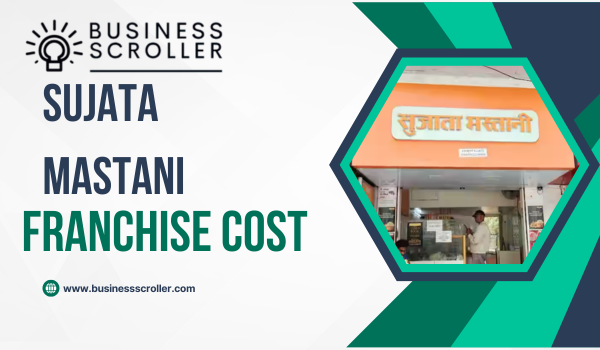
Here’s how the Sujata Mastani franchise model is typically structured:
- The franchisor (Sujata Mastani brand) provides: brand name and trademark, signature menu items (mastani variants, ice-cream/falooda/dessert line), training in product preparation, basic operations manual, and some support for branding/marketing.
- The franchisee provides: retail space (lease/own) with suitable size and footfall, fit-out and interior (depending on format), staff to serve & operate, working capital and everyday operations (inventory, staff, customer service).
- Commercial terms: There is usually a one-time franchise fee + infrastructure/setup investment + possibly a royalty or revenue-share clause (some sources state ~5% royalty). For example, one source notes a royalty of about 5% on sales.
- Store size: Many sources quote 100-300 sq.ft as the required area for a unit.
- Format: Because of the size and product line, many outlets may be dessert/ice-cream counters or kiosk/quick-service format rather than full-sit-down restaurant. This makes fit-out and staffing needs more manageable.
Cost & Investment: What you need to budget
Here are realistic investment ranges based on published data; use these for modeling — your actual cost will depend heavily on location (Tier-1 vs Tier-2 city), rental/leasing, interior quality, and local raw‐material/labour cost.
Typical cost range
- According to one source: Total investment ₹6 lakh to ₹11 lakh (for smaller format) including franchise fee & setup.
- Another listing reports investment of ₹10 lakh to ₹15 lakh (in some cases) for certain formats.
- On a higher side, one source listed investment from ₹15 lakh to ₹30 lakh (for larger unit/size) though this may apply to premium location or bigger format.
Breakdown of cost components
- Franchise Fee: ~₹1 lakh (as reported) for one model.
- Infrastructure / Setup / Interiors: Could be ~₹5 lakh to ₹10 lakh or more depending on location and format.
- Working Capital / Opening Inventory / Fit-out: Additional costs for equipment (freezers, display counters), initial stock (ice-cream, mastani base), signage, furniture (if any).
- Rental / Lease / Fit-out deposit: Must budget for rental cost (depending on city & location) and possibly advance lease rentals/deposits.
- Royalty / Ongoing fees: Some sources give royalty ~5% of sales to the brand.
Example cost summary
- Franchise fee: ~₹1,00,000
- Setup/infrastructure: ~₹5,00,000-₹10,00,000
- Working capital/rental/security/other: ~₹1,00,000-₹3,00,000 (varies)
- Total: ~₹6–11 lakh (for smaller 100-300 sq.ft store in smaller town or modest high-street).
For better location/large format, budget maybe ~₹12-15 lakh or more.
Store size considerations
- Minimum area: ~100 sq.ft quoted; upper model 300 sq.ft.
- Suitable format: High-footfall kiosks, food courts, semi-open counters in malls or near college/office clusters.
- Because area is smaller compared to full restaurants, rent and operational costs are lower — a plus.
Expected ROI & Breakeven
- The franchise listings show ROI (breakeven) of 0.5 to 1 year (i.e., 6 to 12 months) in ideal conditions.
- One profit-margin example (from an estimate) shows: monthly sales ~₹3,00,000; cost of ice-creams + royalty ~₹1,80,000; rent ₹40,000; other expenses ₹30,000; net profit ~₹40,000 => margin ~13.33%. With improved sales ~₹4,00,000/month this margin could move up to ~20% (~₹80,000/month) in a good location.
- Key drivers for ROI: footfall, location (near offices/colleges), overhead cost control (rent, utilities, staffing), brand support and seasonal upsell. Note: dessert/ice-cream businesses have some seasonal impact (higher in summer) but strong brands mitigate seasonality.
Practical viewpoint
- If you invest ₹8 lakh and you achieve net profit ~₹40,000/month in initial year, you might break even in ~20 months. With better location or higher sales, you might break even in ~12-18 months (as per brand claims).
- Post-break-even, profits can increase if you expand product line, add regular customers, optimize cost and drive higher average transaction value.
- However, you must plan for slower initial months (setup, marketing ramp) and possibly invest in local promotions.
Eligibility Criteria & What the Brand Looks For
To qualify for a Sujata Mastani franchise, you should typically meet:
- Age: The brand mentions age minimum ~21 years.
- Financial ability: To meet investment cost + working capital until the business stabilizes.
- Suitable site/space: Having or being able to secure a location of 100-300 sq.ft (or more depending on format) in high-footfall area (mall, high street, near colleges/offices).
- Business experience: Not strictly required (many listing say business experience optional) but helpful.
- Willingness to follow brand systems: Training, operations, staff, menu adherence, brand guidelines.
- Legal compliances: GST registration, FSSAI (food business license), lease agreement, trade/licence as per local norms. Some listings specifically mention document list.
Steps to Apply: Your Roadmap
Here’s a practical step-by-step process you can follow to apply for a Sujata Mastani franchise and launch:
- Self-assessment & Budgeting
- Determine your investment capacity (₹6-15 lakh range).
- Decide preferred city/town (Tier-1, Tier-2) and target location type (mall, high-street, food court, near colleges).
- Estimate rental/leasing costs in your chosen area, target footfall and competitor presence.
- Research the brand & reach out
- Visit the brand’s official website (if available) or trusted franchise-listing sites to get more details.
- Fill the franchise enquiry form (many listing sites link to “Apply Franchise” or “Enquire now”) or contact their franchise development team. For example: the franchiselistings show you can fill a form and get a “franchise specialist”.
- Location & Proposal Submission
- Scout potential site(s): get photos, footage, lease/lease-hold details, approx rent, size.
- Submit site proposal along with your business profile (investment capacity, proposed format, prior experience).
- The brand will evaluate site feasibility: footfall, visibility, competition, rental terms.
- Agreement & Commercial Terms
- On approval, the brand will give you the Franchise Agreement containing: franchise fee, royalty/percentage of sales, support/services by brand, term (often 2 years as per listing)
- Negotiate with caution: exclusivity (can other units open nearby?), territory rights, renewal cost, termination clause, training and support obligations.
- Store Setup & Launch
- Lease or purchase your location; complete fit-out (display counters, signage, décor, equipment) in line with brand specifications.
- Hire and train staff; brand should provide training in product preparation, operations, hygiene, service. Listings show training is available.
- Order initial inventory, equipment (freezers, mixers, counters), signage and shop-front.
- Launch marketing: local awareness campaigns, social media, partnerships (college, youth events), maybe food-delivery tie-up.
- Operate & Grow
- Monitor daily operations: sales, footfall, average transaction value, stock turnover, staff efficiency.
- Focus on upselling (premium mastani variants, add-ons), cross-selling (falooda, ice-cream variants) and customer retention (loyalty).
- After stabilisation, aim to optimize cost (rent, utilities, staff) and consider expanding to multiple units.
Practical Tips & Things to Watch Out
Helpful Tips:
- Location is critical: Even strong brand + good product won’t compensate for low footfall or poor visibility. Aim near college zones, malls, busy high-streets where youth hang out.
- Footprint size: Since the model requires only 100-300 sq.ft, you have flexibility in smaller premises — helpful in Tier-2 cities.
- Upsell premium variants: Mastani variants with dry fruits, mango, chocolate etc can fetch higher ticket size.
- Seasonal strategy: Although desserts/ice-cream have peak in warmer months, outlets can reduce seasonality risk by offering year-round variants and tie-ups (evening snacks, chilled shakes).
- Efficient staffing & cost control: With smaller format, keep overheads lean (2-3 staff initial) and control wastage of perishables.
- Marketing & loyalty: Being a dessert brand, impulse purchases matter — social media presence, youth appeal, eye-catching store look help.
Red Flags / Things to Check:
- If rental cost is too high relative to your projected sales — estimate monthly rent as major fixed cost.
- Hidden costs: Find out if there are additional “mandatory purchases” from the franchisor (equipment, signage, uniforms) not included in initial investment.
- Royalty structure clarity: Confirm exactly what % or fixed fee you will pay monthly. Some sources show ~5%.
- Exclusivity/territory rights: Check whether other units may be allowed very close, which could cannibalise business.
- Brand consistency & support: Some franchisee-reviews (on forums) point to inconsistencies at outlets. For example, one Reddit thread mentioned differences in quality between outlets.
- Proof of actual performance: Ask franchisor for sample P&L or talk to existing franchisees (if possible) in your city or region.
Final Thoughts
If you are looking at a low-to-moderate investment food franchise opportunity in India, Sujata Mastani offers an interesting proposition: relatively compact size, clear brand equity in its region, and good margin potential. Based on published listings, you might invest ₹6 lakh-₹11 lakh for the smaller format, and aim for breakeven within 6-12 months under strong conditions. In a good location, monthly profits after stabilisation could grow meaningfully.
But remember: every successful franchise needs three fundamentals working together — right location, strong operations, and brand support / marketing. Don’t rely solely on the brand; do your homework, negotiate smart lease terms, model your cash flows conservatively (plan for low-first few months), and ensure you have a clear marketing launch plan.

Shashi Kant is the Founder and Editor of BusinessScroller.com, a leading platform for business insights, finance trends, and industry analysis. With a passion for journalism and expertise in business reporting, he curates well-researched content on market strategies, startups, and corporate success stories. His vision is to provide valuable information that empowers entrepreneurs and professionals. Under his leadership, BusinessScroller.com has grown into a trusted source for in-depth articles, customer care guides, and financial expertise.


Sujata Mastani franchise leni hai contact and please contact and training my location nearby best market . Please for franchise help me.
Sujata mastani ki franchise lena hai contact and please contact in kharadi area