
When you invest in mutual funds through a distributor, agent, or advisor, they earn a fee for helping you choose, buy, and manage your investments. One such fee is known as the trail commission. If you are a new or experienced investor, understanding how trail commission works is important because it directly affects the cost of investing and the service quality you receive.
In this guide, we’ll break down what trail commission is, how it works, its benefits, charges, and common FAQs—all in simple terms.
What Is Trail Commission in Mutual Funds?
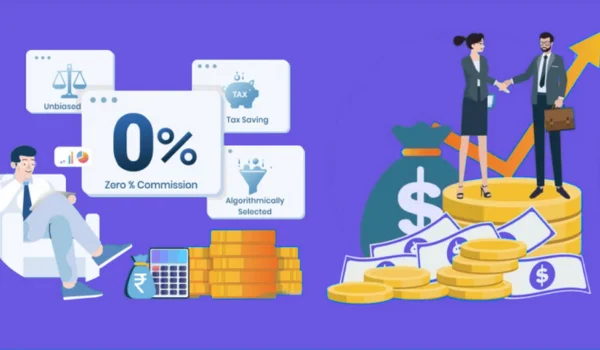
Trail commission is a regular, ongoing fee paid by the mutual fund company (AMC) to the distributor for as long as the investor stays invested in a mutual fund scheme.
It is not a one-time payment.
Instead, it is calculated every month or quarter as a small percentage of your total investment value (AUM).
In simple words:
Trail commission = A yearly/quarterly fee distributors receive for servicing your mutual fund investment.
How Does Trail Commission Work?
Here’s a simple breakdown:
- You invest in a mutual fund through a distributor/agent/broker.
- The mutual fund company pays the distributor a small percentage (example: 0.5% to 1% per year) as a trail commission.
- This fee continues as long as you remain invested.
- The commission is paid from the fund’s expense ratio, not directly from your pocket.
Example:
You invest ₹1,00,000 in a mutual fund.
Trail commission = 1% per year.
Distributor earns = ₹1,000 per year.
If your investment grows, commission grows too.
If your investment reduces, commission reduces accordingly.
Types of Trail Commission
There are mainly two types:
- Level Trail Commission
- Same percentage every year.
- Example: 0.80% every year on your AUM.
- Most common in India.
- Clawback Trail Commission
- Distributor earns only if the investor stays invested for a minimum period.
- If the investor exits early, a part of the commission may be reversed (taken back).
Trail Commission vs Upfront Commission
| Feature | Trail Commission | Upfront Commission |
| Payment Frequency | Ongoing (every year) | One-time (at the start) |
| Source | Comes from expense ratio | Usually charged from investor indirectly |
| Regulation | Allowed in India | Mostly banned by SEBI** |
| Distributor Incentive | Long-term relationship | Short-term sales-driven |
| Investor Impact | More transparent | Earlier it increased costs |
Note: SEBI banned upfront commissions to protect investor interest, making trail-only model the standard now.
Why Do Mutual Funds Pay Trail Commission?
Mutual funds pay trail commission to distributors because they offer:
- Investment advice
- Portfolio suggestions
- Documentation and KYC support
- SIP setup and management
- After-sales service
- Investor awareness and guidance
It ensures advisors stay motivated to support investors for the long term.
Does Trail Commission Affect Investors?
Yes—but indirectly.
Trail commission is paid from the expense ratio of the fund.
This means all investors in the fund share the cost, not just those using distributors.
But the key point:
You do not pay trail commission separately. It’s already included in the fund’s annual cost.
Trail Commission in Direct vs Regular Plans
| Feature | Direct Plan | Regular Plan |
| Trail Commission | ❌ No commission | ✔️ Commission included |
| NAV | Higher | Lower |
| Returns | Higher (1% to 1.5% more) | Slightly lower |
| Who Should Choose? | DIY investors | Those who need guidance |
If you invest without a distributor, you choose a direct plan, and the AMC does not pay any commission.
Typical Trail Commission Rates in India
Trail commission rates vary depending on the:
- Fund category
- AMC
- Market conditions
- Investor’s investment duration
General range:
| Fund Type | Approx. Trail Commission |
| Equity Funds | 0.80% to 1.2% |
| Hybrid Funds | 0.50% to 0.90% |
| Debt Funds | 0.25% to 0.70% |
| Liquid Funds | 0.05% to 0.25% |
These are standard industry averages.
Benefits of Trail Commission (For Investors)
Even though trail commission is a cost, it has some benefits:
✔️ Better long-term service
Advisors stay motivated to support your investment for years.
✔️ Eliminates mis-selling
Upfront commission (now banned) often led to aggressive selling.
Trail model encourages advisors to retain clients through honest service.
✔️ Transparent cost structure
Because trail commission is part of the expense ratio, cost impact is clear and regulated by SEBI.
Drawbacks of Trail Commission
❌ Returns of regular plans are slightly lower
Due to the commission component.
❌ Dependency on distributor
Some investors may rely too much on advisors.
❌ Different AMCs offer different commissions
This can create a conflict of interest if a distributor promotes funds with higher commissions.
Should You Care About Trail Commission?
Yes—because it helps you decide whether:
- You want support (regular plan), or
- You want to manage your investments yourself (direct plan).
Choose Regular Plan if:
- You want hand-holding
- You don’t understand mutual funds
- You need help reviewing your portfolio
Choose Direct Plan if:
- You can research and manage funds
- You want higher returns
- You prefer low-cost investing
Conclusion
Trail commission is an ongoing fee paid by AMCs to distributors for servicing your investment.
It is included in the expense ratio and encourages advisors to support you for the long term. While direct plans offer slightly higher returns, regular plans are better for those who need guidance.
Understanding trail commission helps you make smarter and more cost-effective investment decisions.
FAQs
- Who pays trail commission?
The mutual fund company pays the commission from the fund’s expense ratio.
- Do I pay trail commission directly?
No. It is adjusted within the fund’s yearly cost.
- Why is the NAV of regular plans lower than direct plans?
Because trail commission is deducted from regular plan expenses.
- Is trail commission allowed in India?
Yes. SEBI has banned upfront commission but permits trail-only commissions.
- Is a regular plan bad?
Not at all. It suits investors who want expert guidance.

Shashi Kant is the Founder and Editor of BusinessScroller.com, a leading platform for business insights, finance trends, and industry analysis. With a passion for journalism and expertise in business reporting, he curates well-researched content on market strategies, startups, and corporate success stories. His vision is to provide valuable information that empowers entrepreneurs and professionals. Under his leadership, BusinessScroller.com has grown into a trusted source for in-depth articles, customer care guides, and financial expertise.