
In today’s digital India, managing employees through paperwork is becoming outdated. Governments and businesses are rapidly shifting to HRMS (Human Resource Management System) platforms. One such important initiative is the HRMS Bihar Login portal, developed by the Government of Bihar to simplify employee management.
This article explains everything to you from login process to HRMS features, benefits, payroll, compliance, and how businesses in India can use HRMS effectively.
What is HRMS Bihar?
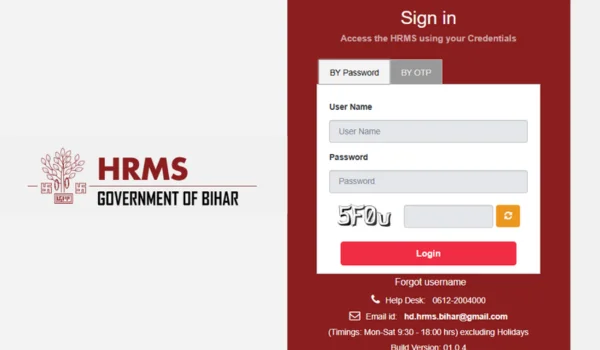
HRMS Bihar is an online portal launched by the Government of Bihar to manage all employee-related services digitally. It is available at hrms.bihar.gov.in and is mainly used by government employees like teachers, police staff, and administrative workers.
Instead of visiting offices for small tasks like salary slips or leave approval, employees can now do everything online.
Key Uses of HRMS Bihar:
- Salary slip download
- Leave application
- Service book access
- Attendance tracking
- Personal data updates
The portal serves 6+ lakh government employees across departments.
How HRMS Bihar Login Works (Step-by-Step)
The login process is simple:
Step 1:
Visit the official portal: hrms.bihar.gov.in
Step 2:
Enter:
- User ID (Employee ID)
- Password or OTP
Step 3:
Click on “Login”
Step 4:
Access dashboard for:
- Payroll
- Leave
- Service records
The system also provides OTP login for first-time users.
What is HRMS in the Indian Business Environment?
HRMS stands for Human Resource Management System. It is a software that combines multiple HR functions into one system.
In India, HRMS is widely used in:
- Government departments (like HRMS Bihar)
- Startups and SMEs
- Large enterprises
HRMS integrates:
- Payroll
- Recruitment
- Attendance
- Compliance
- Employee database
It replaces manual processes like registers, Excel sheets, and paper files.
Key Features of HRMS (Explained Simply)
- Payroll Management (PF, ESI, TDS)
Payroll is the most important part of HRMS.
HRMS handles:
- Salary calculation
- Provident Fund (PF)
- Employee State Insurance (ESI)
- Tax Deducted at Source (TDS)
Example:
If an employee earns ₹30,000:
- PF deducted automatically
- TDS calculated based on income
- Net salary generated instantly
In HRMS Bihar, salary slips are available online instantly.
- Attendance Management
HRMS tracks:
- Daily attendance
- Late entries
- Work hours
Modern systems integrate:
- Biometric machines
- Mobile attendance apps
Example:
A factory worker’s attendance is recorded automatically—no manual register needed.
- Leave Management
Employees can:
- Apply for leave online
- Track leave balance
- Get approvals digitally
HRMS Bihar also allows leave application directly through the portal.
- Recruitment & Hiring
HRMS helps HR teams:
- Post job openings
- Track candidates
- Schedule interviews
- Manage onboarding
Example:
A startup can hire employees without maintaining spreadsheets.
- Compliance with Indian Labor Laws
This is critical in India.
HRMS ensures compliance with:
- PF Act
- ESI Act
- Income Tax rules
- Shops & Establishment Act
It reduces risk of penalties and audits.
How HRMS Bihar Improves Government Work
Before HRMS:
- Employees had to visit offices
- Paperwork delays
- Lack of transparency
After HRMS:
- Everything is online
- Faster approvals
- Better transparency
This transformation has improved efficiency across Bihar departments.
Benefits of HRMS for Businesses in India
- For Small Businesses
- Saves time
- Low cost automation
- No need for large HR team
- For Startups
- Scalable systems
- Easy hiring & payroll
- Cloud access
- For Enterprises
- Centralized employee data
- Advanced analytics
- Compliance management
Real-Life Example (India)
Example 1: Small Business
A Delhi-based shop owner:
- Uses HRMS for salary
- Tracks attendance via mobile
- Files GST & payroll easily
Example 2: Government (HRMS Bihar)
A teacher:
- Downloads salary slip online
- Applies leave digitally
- Checks service record anytime
HRMS vs Traditional HR Methods
| Feature | HRMS | Traditional HR |
| Payroll | Automated | Manual calculation |
| Attendance | Real-time | Register-based |
| Leave | Online approval | Paper forms |
| Compliance | Auto updates | Manual tracking |
| Speed | Fast | Slow |
Common Mistakes While Using HRMS
- Wrong Data Entry
Leads to payroll errors - Ignoring Compliance Settings
Can cause legal penalties - Not Training Employees
Reduces system usage - Choosing Cheap Software Only
Low-quality tools create problems
Cost of HRMS in India
Costs vary:
- Basic HRMS: ₹50–₹150 per employee/month
- Mid-level: ₹150–₹500
- Enterprise: ₹500+
Government systems like HRMS Bihar are free for employees.
How to Choose the Right HRMS Software in India
- Check Features
Ensure it includes:
- Payroll
- Attendance
- Compliance
- Scalability
Choose software that grows with your business.
- Ease of Use
Simple interface is important.
- Support & Training
Good customer support is essential.
- Data Security
Employee data must be protected.
Practical Tips for Beginners
- Start with cloud-based HRMS
- Train employees properly
- Regularly update data
- Check compliance settings monthly
FAQ (Frequently Asked Questions)
- What is HRMS Bihar?
It is a digital portal for Bihar government employees to manage HR services online.
- Who can use HRMS Bihar?
Only Bihar government employees.
- Can private companies use HRMS?
Yes, HRMS is widely used in private businesses across India.
- Is HRMS mandatory in India?
Not mandatory, but highly recommended for compliance.
- Is HRMS secure?
Yes, if proper software and security practices are used.
Conclusion
HRMS Bihar Login is a great example of how digital systems are transforming HR management in India. It has reduced paperwork, improved transparency, and made employee services faster and easier.
For businesses—whether small startups or large enterprises—HRMS is no longer optional. It is a must-have tool for managing payroll, compliance, and workforce efficiently.
If you are still using manual HR methods, switching to HRMS can save time, reduce errors, and help your business grow faster in today’s competitive environment.

Shashi Kant is the Founder and Editor of BusinessScroller.com, a leading platform for business insights, finance trends, and industry analysis. With a passion for journalism and expertise in business reporting, he curates well-researched content on market strategies, startups, and corporate success stories. His vision is to provide valuable information that empowers entrepreneurs and professionals. Under his leadership, BusinessScroller.com has grown into a trusted source for in-depth articles, customer care guides, and financial expertise.