
Modern farming has evolved far beyond traditional methods of uniform application across entire fields. Today’s agricultural operations demand precision, efficiency, and sustainability in equal measure. The integration of advanced technologies into crop production has fundamentally changed how farmers approach field management, allowing them to optimize inputs while maximizing outputs. This shift represents not just an incremental improvement but a complete transformation in agricultural methodology.
Understanding how variable rate technology works has become essential for farmers seeking to remain competitive in an increasingly data-driven industry. This approach enables producers to treat different areas of their fields according to specific needs rather than applying uniform rates across entire acreages. The result is reduced waste, lower input costs, and improved environmental stewardship alongside enhanced productivity.
The Foundation of Site-Specific Management
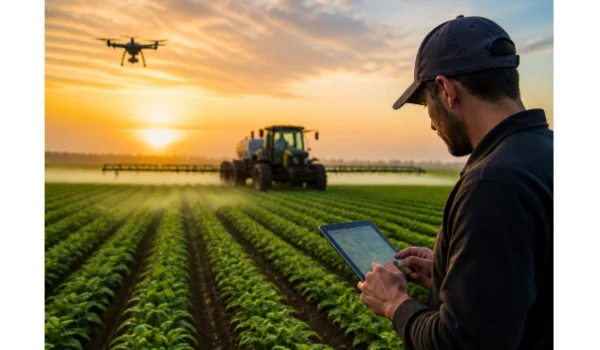
Agricultural fields are rarely uniform. Soil composition, moisture retention, nutrient availability, and topography can vary dramatically even within a single parcel. Traditional farming methods treated these variations as unavoidable constraints, applying identical amounts of seed, fertilizer, and chemicals regardless of localized conditions. This approach inevitably led to over-application in some areas and under-application in others, resulting in wasted resources and suboptimal yields.
Precision agriculture addresses this challenge by dividing fields into management zones based on documented variability. Through soil sampling, yield mapping, and remote sensing, farmers can identify distinct areas with different agronomic characteristics. This granular understanding forms the basis for targeted interventions that match inputs to actual field conditions rather than relying on field-wide averages.
Technology-Driven Field Analysis
The effectiveness of precision agriculture depends heavily on accurate data collection and analysis. GPS-enabled equipment tracks exact positions within fields, while sensors measure soil properties, moisture levels, and crop health indicators in real time. Satellite and drone imagery provide additional layers of information, revealing patterns invisible to ground-level observation.
Data Integration and Interpretation
Raw data alone offers limited value without proper interpretation. Modern farm management systems aggregate information from multiple sources, creating comprehensive field maps that highlight zones requiring different treatment protocols. These platforms analyze historical yield data alongside current season observations, identifying correlations between management practices and outcomes. Farmers can then make informed decisions based on empirical evidence rather than intuition alone.
The sophistication of these systems continues to advance rapidly. Machine learning algorithms detect subtle patterns across seasons and identify optimal application rates for specific conditions. Predictive models forecast how fields will respond to different management strategies, allowing producers to simulate scenarios before committing resources to particular approaches.
Implementation Across Farm Operations
Adopting precision agriculture requires investment in both equipment and knowledge. GPS-guided tractors, variable-rate applicators, and yield monitors represent significant capital expenditures. However, the return on investment typically materializes through reduced input costs, improved yields, and enhanced land stewardship. Many operations implement these technologies incrementally, starting with one or two systems before expanding to comprehensive precision management.
The learning curve can be steep, particularly for operations transitioning from conventional methods. Successful implementation demands not only technical proficiency but also a fundamental shift in management philosophy. Farmers must become comfortable with data analysis, digital interfaces, and complex decision-making processes that account for numerous variables simultaneously. Agricultural technology adoption continues to accelerate as equipment becomes more user-friendly and support systems more robust.
Practical Application Methods
Variable-rate technology manifests across multiple farming operations. Seeding equipment adjusts population rates based on soil productivity potential, placing more seeds in high-yielding zones and fewer in areas with limited potential. Fertilizer applicators modify nutrient delivery according to soil test results and crop removal rates from previous seasons. Sprayers alter chemical application rates to match weed pressure and pest populations in different field sections.
These adjustments occur automatically during field operations, with controllers receiving prescription maps that dictate appropriate rates for each location. Operators monitor system performance to ensure proper execution, but the technology handles the complex calculations and real-time adjustments necessary for precise application.
Economic and Environmental Benefits
The financial advantages of precision agriculture extend beyond simple input savings. While reduced fertilizer, seed, and chemical costs represent immediate benefits, the long-term gains include improved soil health, sustained productivity, and reduced environmental impact. Fields managed with precision techniques typically show less nutrient runoff, decreased chemical residues, and better carbon sequestration compared to conventionally managed land.
Regulatory pressures and consumer expectations increasingly favor sustainable production methods. Precision agriculture provides documented evidence of responsible resource management, supporting certification programs and premium marketing opportunities. Operations that can demonstrate reduced environmental footprints while maintaining productivity often access markets willing to pay premiums for responsibly produced commodities.
Building Agricultural Enterprises for the Modern Era
As technology reshapes production agriculture, opportunities emerge for entrepreneurs and established operations alike to build businesses around precision farming services and support. Custom application services equipped with advanced technology serve farmers who cannot justify equipment purchases for their operation sizes. Data analysis consultants help producers interpret complex information and develop management strategies. Equipment dealers and technology providers supply hardware, software, and ongoing technical support essential for system operation.
For those exploring pathways into agricultural business, opportunities exist across the technology adoption spectrum, from direct production to supporting services that enable precision agriculture implementation. The sector continues expanding as adoption rates increase and systems become more sophisticated.
Advanced Equipment and Precision Implementation
Leading agricultural equipment manufacturers have invested heavily in developing machinery capable of executing precision management strategies. Modern planters feature individual row control, allowing seed population adjustments on the fly as conditions change across the field. Sprayers equipped with pulse-width modulation technology maintain consistent application rates regardless of ground speed variations. Combines with yield monitoring systems generate detailed harvest maps that inform future season planning.
The integration between different equipment platforms continues improving, with machinery from various manufacturers increasingly capable of sharing data and working within unified management systems. This interoperability reduces friction in technology adoption and allows farmers to select best-in-class equipment for each operation without sacrificing system integration.
Future Directions in Farm Technology
Autonomous equipment represents the next frontier in precision agriculture. Self-driving tractors and robotic implements promise to reduce labor requirements while increasing operational precision. These systems operate continuously with minimal supervision, executing programmed tasks with consistency impossible for human operators. Early adopters report improved efficiency and reduced fatigue-related errors during peak season operations.
Artificial intelligence applications continue expanding, with systems now capable of identifying individual plants, assessing health status, and recommending targeted interventions. Computer vision enables weed identification at the species level, allowing selective herbicide application that reduces chemical use while maintaining control. Similar technologies assess pest pressure, disease incidence, and nutrient deficiencies with increasing accuracy.
Conclusion
Precision agriculture has transitioned from experimental novelty to mainstream practice across commercial farming operations. The combination of detailed field analysis, sophisticated data management, and responsive equipment systems enables productivity gains while reducing environmental impact. As technology continues advancing and costs decline, adoption will likely expand to smaller operations currently relying on conventional methods. The transformation of agriculture through precision technology represents one of the most significant shifts in farming practices since mechanization, promising enhanced sustainability and productivity for generations to come.

Shashi Kant is the Founder and Editor of BusinessScroller.com, a leading platform for business insights, finance trends, and industry analysis. With a passion for journalism and expertise in business reporting, he curates well-researched content on market strategies, startups, and corporate success stories. His vision is to provide valuable information that empowers entrepreneurs and professionals. Under his leadership, BusinessScroller.com has grown into a trusted source for in-depth articles, customer care guides, and financial expertise.