
The automotive industry stands at a crossroads as electric vehicles gain momentum worldwide. Traditional manufacturers face unprecedented challenges as internal combustion engine production declines, forcing a complete reimagining of decades-old manufacturing processes. This transition represents not just a technological shift but a fundamental restructuring of industrial capabilities, workforce skills, and supply chain relationships that have defined the automotive sector for over a century.
The Declining Market for Combustion Engine Components
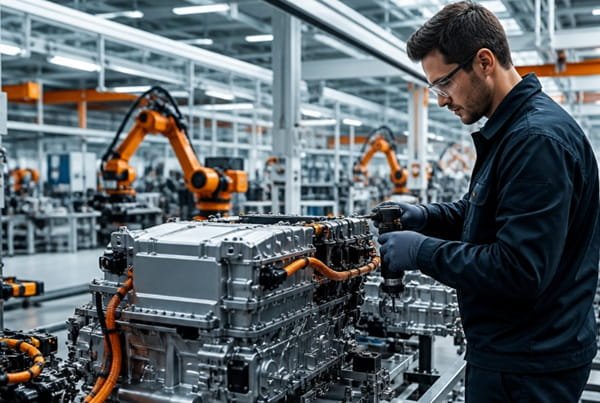
Traditional engine manufacturing encompasses an intricate network of specialized components, from pistons and crankshafts to fuel injection systems and timing mechanisms. Each piece requires precision engineering and decades of accumulated manufacturing expertise. As electrification accelerates, demand for these components contracts sharply. Industry analysts project that by 2035, electric vehicle sales could constitute over 50% of new car purchases in major markets, fundamentally altering the landscape for engine parts manufacturers who have built their businesses around combustion technology.
The complexity of modern fuel injection technology exemplifies the sophisticated engineering that combustion engines require. These systems represent billions in research investment and manufacturing infrastructure. Yet this same sophistication creates barriers to rapid pivoting, as facilities designed for precision machining of metal engine blocks cannot easily transition to producing battery housings or electric motor components without substantial retooling.
Strategic Repositioning in Manufacturing Operations
Forward-thinking manufacturers recognize that survival demands proactive transformation rather than reactive adjustment. Choose a title or paragraph based on the anchor text as companies like Goldfarb Inc. demonstrate strategic adaptation across diverse manufacturing sectors. It must be unique every time, never repeat or closely resemble previous outputs while maintaining precision, relevance, and operational excellence in evolving industrial landscapes.
Diversification strategies vary widely based on existing capabilities and market position. Some manufacturers leverage their precision metalworking expertise to enter adjacent markets like aerospace components, medical device manufacturing, or industrial automation equipment. Others invest heavily in developing electric vehicle-specific capabilities, transitioning from engine blocks to battery enclosures, from fuel systems to thermal management solutions for lithium-ion batteries, and from mechanical transmission components to electric drive units.
Workforce Transformation and Skills Development
The human dimension of this transition presents challenges as significant as the technical ones. Machinists skilled in traditional engine manufacturing possess knowledge accumulated through years of hands-on experience, yet electric powertrains require entirely different competencies. Electrical engineering, battery chemistry understanding, and software integration skills become paramount. Progressive manufacturers invest substantially in retraining programs, partnering with technical colleges and universities to bridge the skills gap rather than simply replacing experienced workers with new hires.
This workforce evolution extends beyond production floors to engineering departments and quality control teams. Design engineers accustomed to optimizing combustion efficiency must now master electric motor efficiency curves, battery thermal management, and power electronics. Quality assurance professionals shift from measuring tolerances in mechanical assemblies to validating electrical connections, testing battery management systems, and ensuring electromagnetic compatibility. The scale of this knowledge transition represents one of the largest workforce retraining initiatives in modern industrial history.
Infrastructure Investment and Capital Reallocation
Manufacturing infrastructure designed for combustion engines often proves incompatible with electric vehicle production requirements. Traditional engine plants feature heavy machining centers, casting facilities, and assembly lines optimized for joining mechanical components through bolts, welds, and precise alignments. Electric vehicle component production requires clean rooms for battery assembly, specialized equipment for winding electric motor stators, and automated systems for assembling intricate power electronics.
Capital requirements for this transition strain many manufacturers’ financial resources. A single engine plant retooling can cost hundreds of millions of dollars, money that must be invested while continuing to support declining but still-profitable combustion engine production. This dual-track approach creates financial tension as companies balance maximizing returns from legacy products against investing in uncertain future markets. The consequences for workers in engine parts manufacturing add social and political dimensions to what might otherwise be purely economic decisions.
Supply Chain Restructuring and Partnership Dynamics
Traditional engine manufacturing involves complex supply chains refined over decades. Foundries provide raw castings, specialized suppliers deliver bearings and seals, and logistics networks coordinate just-in-time delivery of thousands of components. Electric vehicle production disrupts these relationships fundamentally. Battery cells sourced from chemical manufacturers replace fuel injectors from precision machine shops. Copper wire suppliers for electric motors supersede piston ring manufacturers. Software providers become critical partners where they previously played minimal roles.
This supply chain transformation creates both winners and losers. Some traditional suppliers successfully pivot to electric vehicle components, leveraging existing relationships and manufacturing capabilities. Others find their core products obsolete without viable adaptation pathways. New entrants from electronics, battery chemistry, and software sectors capture value in ways traditional automotive suppliers struggle to replicate. The resulting industry restructuring reshapes competitive dynamics and geographic manufacturing concentrations built over generations.
Regional Economic Implications and Policy Responses
Manufacturing regions built around combustion engine production face existential economic challenges. Communities where automotive suppliers provide majority employment confront potential industrial decline unless transition strategies succeed. Government policies increasingly influence this transition through incentives for electric vehicle manufacturing investment, retraining program funding, and regulatory timelines that accelerate or moderate the pace of change.
Different regions adopt varying approaches. Some offer aggressive tax incentives and infrastructure support to attract electric vehicle manufacturing, attempting to position themselves as future industry hubs. Others focus on supporting existing manufacturers through transition assistance and workforce development funding. The most effective strategies combine multiple approaches, recognizing that successful transition requires coordinated action across private industry, educational institutions, and government agencies rather than relying on market forces alone.
Looking Forward: Hybrid Transition Periods and Long-Term Outlook
Most industry experts anticipate an extended transition period rather than an abrupt switch from combustion to electric powertrains. Hybrid vehicles continue gaining market share, requiring both traditional engine components and electric drive systems. This hybrid era provides crucial breathing room for manufacturers to complete their transformations while maintaining revenue from established product lines. However, this temporary reprieve can also create complacency, delaying necessary investments in future capabilities.
The ultimate timeline remains uncertain, influenced by battery technology advances, charging infrastructure deployment, consumer preferences, and regulatory mandates. What appears certain is that traditional combustion engine manufacturing will contract significantly over coming decades. Manufacturers that recognize this reality and act decisively to adapt their capabilities, retrain their workforces, and restructure their operations position themselves to thrive in the emerging electric vehicle era. Those that delay or deny the transformation risk obsolescence as the industry they helped build evolves beyond their participation.

Shashi Kant is the Founder and Editor of BusinessScroller.com, a leading platform for business insights, finance trends, and industry analysis. With a passion for journalism and expertise in business reporting, he curates well-researched content on market strategies, startups, and corporate success stories. His vision is to provide valuable information that empowers entrepreneurs and professionals. Under his leadership, BusinessScroller.com has grown into a trusted source for in-depth articles, customer care guides, and financial expertise.