If you want to understand why some businesses succeed while others fail, you need to start with one simple but powerful concept — the business model.
Whether it’s a small chai stall in Delhi or a billion-dollar startup, every business runs on a model. Many people think success depends only on hard work or investment, but in reality, the way a business is designed to make money plays a much bigger role.
Let’s break it down in simple Indian English so that anyone — even without a business background — can clearly understand.
What is a Business Model?
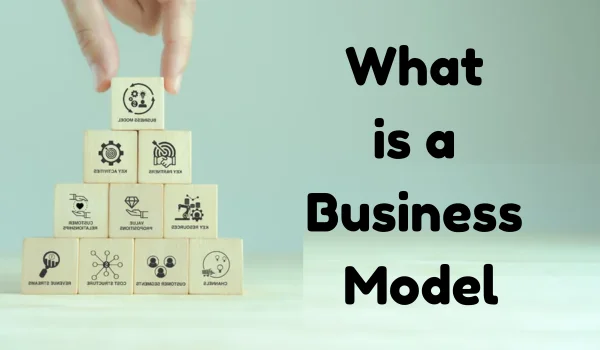
A business model is basically a plan that explains:
- What product or service you offer
- Who your customers are
- How you deliver value to them
- How your business earns money
In simple words:
👉 Business model = How a company creates value + delivers value + earns profit
Example to Understand Easily
Imagine you start a small tea stall:
- You sell tea for ₹10 per cup
- Your customers are office workers and students
- You make tea using low-cost ingredients
- You earn profit by selling high volume
This is your business model — simple, but effective.
Now compare it with a premium café:
- Coffee price: ₹150–₹300
- Customers: young professionals
- Value: ambiance + experience
- Profit: high margin, low volume
Same product category (beverages), but completely different business models.
Key Components of a Business Model
A strong business model usually includes these important elements:
- Value Proposition
What problem are you solving?
- Cheap products?
- High quality?
- Convenience?
- Status/luxury?
👉 Example: Fast delivery, low price, or premium quality.
- Target Customers
Who are you selling to?
- Students
- Middle-class families
- Businesses
- Premium customers
Understanding your audience decides everything — pricing, marketing, and product.
- Revenue Streams
How do you make money?
- Direct sales
- Subscription
- Commission
- Advertising
👉 Example: Some companies earn from users, others from advertisers.
- Cost Structure
What are your expenses?
- Rent
- Staff salary
- Raw material
- Marketing
Profit comes only when revenue > cost.
- Distribution Channels
How do you reach customers?
- Physical store
- Website
- Mobile app
- Agents or dealers
- Customer Relationships
How do you keep customers coming back?
- Discounts
- Loyalty programs
- Good service
- Personal connection
Types of Business Models (Common in India)
Let’s look at some popular models you see around you every day:
- Retail Model
Buy products in bulk and sell at a margin.
👉 Example: Kirana stores
- Subscription Model
Customers pay regularly (monthly/yearly).
👉 Example: OTT platforms, gyms
- Franchise Model
You use a brand’s name and system.
👉 Example: Food chains, salons
- Aggregator Model
Connect customers with service providers.
👉 Example: Food delivery, cab services
- Freemium Model
Basic service free, premium features paid.
👉 Example: Apps and software
- Manufacturing Model
Make products and sell to wholesalers/retailers.
How a Business Model Helps a Company Grow
Now let’s come to the most important part — growth.
A good business model is not just about earning money; it is about scaling the business in a smart and sustainable way.
- Gives Clear Direction
Without a business model, a business is like a car without a steering wheel.
It helps you answer:
- What to sell?
- To whom?
- At what price?
👉 This clarity reduces confusion and wrong decisions.
- Helps in Profit Planning
Many businesses fail not because they don’t have customers, but because they don’t have a profit strategy.
A business model helps you:
- Set the right pricing
- Control costs
- Identify profit margins
- Makes Scaling Easier
Scaling means growing your business without increasing costs at the same rate.
👉 Example:
- A digital course can be sold to 10 people or 10,000 people
- Cost remains almost the same
This is the power of a strong business model.
- Attracts Investors
If you ever want funding, investors don’t just look at your idea — they look at your business model.
They ask:
- Is it scalable?
- Is it profitable?
- Is it sustainable?
A clear business model builds trust.
- Improves Decision Making
When you know your model, decisions become easier:
- Should you lower price?
- Should you expand?
- Should you add new products?
Everything becomes logical instead of emotional.
- Builds Competitive Advantage
Your business model can make you different from competitors.
👉 Example differences:
- Lower price
- Faster service
- Better experience
Sometimes, the model itself becomes your biggest strength.
- Helps in Adapting to Change
Markets change fast — especially in India.
A strong business model allows you to:
- Adjust pricing
- Change customer segment
- Add new revenue streams
👉 Example: Many businesses shifted online during COVID and survived.
Real-Life Insight (Important for You)
Since you are interested in business and income growth, here’s a practical insight:
Many people focus only on:
- “Which business to start?”
But successful people focus on:
👉 “Which business model to use?”
Example:
Two people start the same business — selling clothes:
Person A:
- Opens a shop
- Depends on walk-in customers
Person B:
- Uses online + offline
- Adds WhatsApp selling
- Uses reselling model
👉 Result: Person B grows faster because of a better business model.
Mistakes People Make
Let me also highlight some common mistakes:
❌ Copying others blindly
What works for one may not work for you.
❌ Ignoring costs
Revenue looks good, but profit is zero.
❌ No clear target audience
Trying to sell to everyone = selling to no one.
❌ No long-term plan
Only focusing on daily income, not growth.
How You Can Build a Simple Business Model
If you want to start small, follow this simple structure:
- Decide what you will sell
- Identify your target customer
- Fix your pricing strategy
- Calculate your costs
- Choose your selling method (offline/online)
- Plan how you will attract customers
Keep it simple in the beginning — improve later.
Final Thoughts
A business model is not just a technical term — it is the foundation of your business success.
- It tells you how money will come
- It shows how your business will grow
- It helps you avoid losses
- It makes your journey smoother
In India, where competition is high and resources are limited, having a smart business model is even more important than having a big investment.
Simple Takeaway
👉 Don’t just start a business — design a business model.
Because in the long run, strategy beats hard work alone.

Shashi Kant is the Founder and Editor of BusinessScroller.com, a leading platform for business insights, finance trends, and industry analysis. With a passion for journalism and expertise in business reporting, he curates well-researched content on market strategies, startups, and corporate success stories. His vision is to provide valuable information that empowers entrepreneurs and professionals. Under his leadership, BusinessScroller.com has grown into a trusted source for in-depth articles, customer care guides, and financial expertise.