
Most people think self control looks dramatic. They picture gritted teeth, perfect discipline, and the heroic moment when someone resists temptation through sheer force. In real life, it usually looks much quieter than that. It looks like noticing the spark before the fire. It looks like catching the first wave of irritation, panic, shame, or urgency, and choosing not to let it drive the car.
That quiet skill matters in more places than people realize. It shapes how we answer a text when we feel insulted, how we talk to our kids when we are exhausted, and how we make decisions about money when stress is high. Even organizations focused on financial well being, such as National Debt Relief, operate in a world where emotional reactions can easily influence practical choices. The pause between feeling and doing is not just a wellness idea. It is a life skill.
What makes noticing without reacting so powerful is that it does not ask you to become emotionless. It asks you to become available to your experience without being ruled by it. That is a very different goal. You are not trying to crush anger, fear, embarrassment, or craving. You are learning how to sit in the same room with them long enough to make a choice that still sounds like you.
The Pause Is a Form of Self Respect
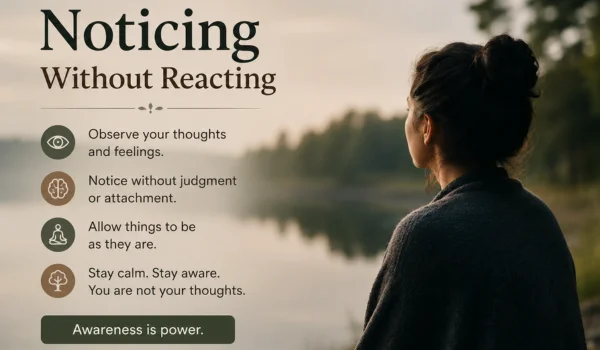
A lot of advice about emotional regulation sounds like behavior management. Count to ten. Walk away. Take a breath. Those tools can help, but they sometimes miss the deeper point. The pause is not just a trick to look calm. It is a way of treating your inner life as worthy of attention.
When you notice an emotion without reacting right away, you send yourself an important message. You are saying, “I do not have to obey every feeling the second it appears.” That does not mean your feelings are wrong. It means they are information, not commands.
This shift can feel strange at first because many of us are used to moving fast. We react to discomfort almost automatically. We defend, explain, purchase, avoid, scroll, snap, or shut down. Those actions can happen so quickly that they feel inevitable. But inevitability is often just unpracticed awareness.
Your Nervous System Loves Speed
One reason reacting feels so natural is that your body is built to detect change and respond quickly. That is useful when something truly needs immediate action. It is less useful when the “threat” is an awkward email, a family comment, or the sudden urge to make a decision just to escape uncertainty.
Mindfulness practices are often described as a way to create space between stimulus and response, which can help people respond more calmly to thoughts and emotions rather than react automatically. MedlinePlus explains meditation and relaxation techniques in a way that supports this simple idea. The goal is not to become blank. The goal is to become steady enough to choose.
The tricky part is that the body often wants relief faster than the mind wants wisdom. That is why noticing matters. If you can identify what is happening in the first few seconds, you are much less likely to confuse urgency with necessity.
Noticing Is More Physical Than People Think
Many people imagine noticing as a mental exercise, but the body usually speaks first. Your jaw tightens. Your shoulders rise. Your chest gets hot. Your stomach drops. Your hands move toward your phone before you have even decided to pick it up.
If you want to react less, start by getting curious about your body’s early signals. Ask yourself what happens right before the reaction. Not after the argument. Not after the regret. Right before. The body often gives you a small warning light.
This is why a simple breath can be so effective. It is not magic. It is a pattern interrupt. It gives your system one more beat before the old script takes over. That beat is where freedom begins.
You Do Not Need to Win Against Your Feelings
One of the most exhausting mistakes people make is turning awareness into a battle. They notice anger and immediately try to get rid of it. They notice anxiety and start criticizing themselves for being anxious. Now there are two problems instead of one.
A more useful approach is acceptance without surrender. In mindfulness practice, this can look like recognizing what is happening, allowing it to be present for a moment, and investigating it with some kindness. The RAIN mindfulness practice from Mindful offers a practical version of that process. You do not have to like what you feel. You only have to stop acting like feeling it means something has gone terribly wrong.
This is where many people discover an unexpected truth. Emotions often become more workable when they are not treated like emergencies.
The Real Test Happens in Ordinary Moments
Noticing without reacting is usually taught in the context of major stress, but everyday life is where the habit is built. It happens when someone interrupts you. When you see a charge on your bank account you forgot about. When a friend takes too long to text back. When you feel the impulse to fix your mood by spending, eating, arguing, or escaping.
These moments can seem too small to matter. They are not. Small reactions accumulate. So do small pauses.
If you practice noticing in low stakes moments, you strengthen the skill for high stakes ones. You begin to recognize your favorite escape routes. You learn which emotions make you rush. You start seeing patterns instead of isolated incidents. That alone can be deeply relieving because patterns can be worked with. Chaos feels personal. Patterns feel workable.
A Pause Can Protect Your Future Self
One of the most underrated benefits of noticing without reacting is that it protects the version of you who will exist an hour from now, tomorrow, or next month. Immediate reactions often serve the current emotion at the expense of the future person who has to clean up the consequences.
That future self is the one who rereads the harsh message, regrets the impulsive purchase, apologizes for the tone, or wonders why a temporary feeling got to make a permanent decision. The pause is an act of loyalty to that person.
Seen this way, noticing is not passive at all. It is deeply responsible. It is active restraint in service of clarity.
How to Practice Without Making It Complicated
You do not need a perfect ritual to begin. Start with one sentence: “Something is happening in me right now.” That sentence creates just enough distance to observe instead of fuse with the feeling.
From there, keep it simple:
- Name the feeling if you can.
- Notice where it shows up in the body.
- Delay action by a minute or two when possible.
- Ask what the emotion wants you to do.
- Ask whether that action fits your values.
That is often enough to change the outcome.
Over time, you may notice that the feeling passes, softens, or reveals something underneath it. Anger may be hurt. Urgency may be fear. Numbness may be exhaustion. Once you can see clearly, you are far more likely to respond with intention.
The Goal Is Not Perfection
You will still react sometimes. Everyone does. The point is not to become impossible to rattle. The point is to recover your ability to choose more often.
Noticing without reacting is a humble practice, but it can reshape a life from the inside out. It helps you become less available to impulse and more available to wisdom. It turns a split second into a turning point. And in a world that rewards speed, that kind of pause is not weakness. It is strength with awareness.

Shashi Kant is the Founder and Editor of BusinessScroller.com, a leading platform for business insights, finance trends, and industry analysis. With a passion for journalism and expertise in business reporting, he curates well-researched content on market strategies, startups, and corporate success stories. His vision is to provide valuable information that empowers entrepreneurs and professionals. Under his leadership, BusinessScroller.com has grown into a trusted source for in-depth articles, customer care guides, and financial expertise.